Process Service

11 Must-Ask Best Questions Before Hiring a Process Server in Texas

Black male pointing his finger on question: How to Hire a Process Server. 11 Must-Ask Questions Before Hiring a Process Server in Texas

11 Must-Ask Questions Before Hiring a Process Server in Texas

Hiring a process server can be a crucial step in any legal proceeding. Whether you’re an attorney, paralegal, investigator, or government agency, choosing the right professional can make the difference between a successful case or costly delays.

At Houston Process Servers, we understand how important it is to hire a process server you can trust. That’s why we’ve created this essential checklist of questions to ask before making your decision.

Why Hiring a Process Server Matters

When you hire a process server, you’re not just paying someone to deliver papers—you’re investing in someone who can follow Texas laws precisely, provide court-acceptable proof of service, and handle evasive or complex defendants without risking the validity of your case.

Making the wrong choice can lead to delayed court dates, service rejection, or even case dismissal.

Evasive person hiding
© Houston Process Servers LLC. All rights reserved

Top 11 Questions to Ask Before Hiring a Process Server

Here’s what to ask before you commit:

Question Why It’s Important
1. Are you certified in Texas (JBCC)? Only certified process servers can serve in most Texas counties, including Harris County.
2. Do you have experience with the type of documents I need served? Some servers specialize in subpoenas, others in restraining orders or civil suits.
3. How many attempts are included in your fee? You want at least 3–4 attempts at different times of day for maximum success.
4. What happens if the person is evasive or hiding? The best servers have strategies such as stakeouts or requesting substitute service.
5. Can you serve at jails or detention centers? Not all servers are allowed or experienced in serving incarcerated individuals.
6. Will I receive a notarized affidavit of service? This is your legal proof and is required for court acceptance.
7. How will I be updated about service progress? Email updates after each attempt are ideal. Avoid companies that only notify upon completion.
8. What is your turnaround time? Standard service should take 4–15 days. Rush and same-day services should also be offered.
9. What areas do you serve? Ensure the process server covers Houston and surrounding areas like Harris, Fort Bend, and Montgomery counties.
10. What payment methods do you accept? Look for companies offering secure online options like credit card, PayPal, or ACH.
11. Do you work with private individuals? Not all companies serve pro se clients. Houston Process Servers works primarily with legal and government professionals.

Signs of a Reliable Process Server

When you hire a process server, look for:

  • Clear communication and responsiveness

  • Transparent pricing with no hidden fees

  • Email confirmations and delivery notifications

  • Professionalism, especially when dealing with evasive or hostile defendants

  • A thorough understanding of Texas civil procedure laws

Why Choose Houston Process Servers?

Our team is certified by the Judicial Branch Certification Commission (JBCC) and specializes in fast, reliable service of process across Houston and surrounding counties.

✅ We handle routine, rush, and same-day service
✅ Jail and hard-to-serve cases accepted
✅ Notarized affidavits included with every service
✅ Stakeout and locate service available
✅ Email updates after every attempt

We don’t serve eviction notices, and we don’t provide live tracking—but we do provide clear communication and updates after every attempt, so you’re always in the loop.

YouTube video

Ready to Hire a Process Server?

Ordering is easy. Just:

  1. Fill out our website form

  2. Receive a quote and invoice via QuickBooks

  3. Make payment securely online

  4. We begin service and send you email updates

  5. Get a notarized affidavit of service upon completion

Final Thoughts on Hiring a Process Server

Choosing the right process server in Texas isn’t just about speed—it’s about legality, accuracy, and communication. By asking the right questions, you protect your case and avoid unnecessary headaches.

Let Houston Process Servers be the trusted team you rely on for fast, compliant service—every time.

Contact us. Houston Process Servers. Process server delivering legal papers to defendants house. Best Process Server,
© Houston Process Servers LLC. All rights reserved

11 Must-Ask Best Questions Before Hiring a Process Server in Texas Read More »

Learn! Is it Legal to Lie to a Process Server?

Black male asking question "Is It Legal to Lie to a Process Server?"

Is It Legal to Lie to a Process Server? What You Need to Know

If someone shows up at your door asking for your name and holding a suspicious envelope, your first instinct might be to deny who you are. But before you do, ask yourself: Can you legally lie to a process server?

In this article, we’ll break down exactly what happens if you lie to a process server, whether it’s against the law, and how the courts handle people who attempt to avoid legal service through deception.

Can You Lie to a Process Server?

Technically, yes—you can lie to a process server. A process server is not law enforcement, and you’re not under oath when interacting with one. This means there’s no immediate criminal penalty for saying, “That’s not me,” or pretending not to be home.

But don’t assume that makes it a smart move.

Here’s why lying to a process server often backfires:

  1. It doesn’t stop the lawsuit.

  2. The process server may come back better prepared.

  3. The court can allow alternate service methods.

  4. Your credibility in court could be damaged.

  5. You may face contempt charges or court sanctions.

So while you might think you’re avoiding trouble, you’re actually increasing your legal risk.

What Happens If You Lie to a Process Server?

Lying may delay personal service, but it won’t stop the legal process. Here’s what can happen if you try to avoid or deceive a process server:

Action Process Server Response Legal Consequence
Deny your identity May use surveillance, take photos, verify neighbors Still counted as valid service if identity is confirmed
Refuse to open the door Multiple attempts, stakeouts, or substitute service May result in court-approved alternate service
Move or change address Server may use skip tracing or database searches Case moves forward without your input
Give false information Documented in an affidavit, used as evidence in court Possible contempt of court or sanctions


Is Lying to a Process Server Illegal?

Lying itself is not automatically illegal unless it leads to:

  • Obstruction of justice

  • Filing false information with the court

  • Interference with an official court order

In some states, repeated efforts to interfere with legal service can result in civil or criminal penalties, especially if you lie to law enforcement during the process or forge documents.

Important: Courts generally frown upon dishonest behavior. Judges can consider your avoidance as bad faith, especially if a default judgment is later challenged.

FAQ: What People Also Ask About Process Servers

Can I pretend not to be home to avoid a process server?

Yes, you can pretend—but process servers are trained to return at different times, question neighbors, and use visual confirmation. Eventually, they’ll complete service through alternate methods.

Can a process server leave papers with someone else?

Yes, under substitute service, they can leave documents with a suitable adult at your residence, or post them on your door with court approval.

Can you go to jail for lying to a process server?

Not for the lie itself, but you can be held in contempt if your actions disrupt a court order or cause legal delays.

What if I never get served because I kept avoiding it?

If a court finds that all reasonable efforts were made, it may grant service by publication or another method. The lawsuit will move forward, and you could lose by default judgment.

What Process Servers Can and Can’t Do

Let’s clarify what process servers are legally allowed to do—and what they’re not.

Can Process Servers… Legally Allowed?
Wear disguises to avoid suspicion ✅ Yes
Lie or deceive to gain entry ❌ No
Impersonate police or court officials ❌ No
Serve someone at work or in a public place ✅ Yes
Leave documents at your door with court approval ✅ Yes


People said NO to a process server
© Houston Process Servers, LLC. All rights reserved


What to Do If You’ve Been Served (Or Know It’s Coming)

Instead of trying to lie to a process server, protect your rights by taking smart, legal action:

  1. Accept the documents calmly and without confrontation.

  2. Review everything — know what you’re being sued for.

  3. Consult an attorney — protect your rights from day one.

  4. File your response on time with the court.

Delaying or denying service only takes away your opportunity to defend yourself.

YouTube video


Final Thoughts: Lying to a Process Server Isn’t a Legal Strategy—It’s a Legal Risk

While you can legally lie to a process server in the moment, it’s rarely a wise decision. Process servers are trained professionals, and the courts have methods to proceed even if you avoid or mislead them. Attempting to delay service through dishonest means often results in default judgmentsthe loss of rights, and damaged credibility.

If you’re dealing with someone who is trying to avoid service—or if you’re facing legal papers—Houston Process Servers can help. We serve hard-to-reach individuals across the Greater Houston area with professionalism, legal accuracy, and results that stand up in court.

Need professional process service in Houston or surrounding counties?
Contact Houston Process Servers today.

Contact us. Houston Process Servers. Process server delivering legal papers to defendants house. Best Process Server,
© Houston Process Servers LLC. All rights reserved

Learn! Is it Legal to Lie to a Process Server? Read More »

How Do You Avoid a Process Server? What You Need to Know?

A process server pointing his finger on you. People avoid a process server.

How Do You Avoid a Process Server? What You Need to Know (and Why It Might Backfire)

When someone knows they’re being sued, it’s not uncommon for them to try to avoid a process server. Whether it’s dodging phone calls, not answering the door, or even going off the grid, some individuals go to great lengths to escape being served legal papers.

But here’s the truth: avoiding a process server doesn’t stop a legal case—it only delays the inevitable. In some cases, it can even make things worse. This article explores how people attempt to avoid a process server, what tactics professionals use to get around those efforts, and the potential legal consequences of evasion.

Why Do People Try to Avoid a Process Server?

People try to avoid being served for many reasons:

  • They want to delay a lawsuit or court date

  • They believe that avoiding service will make the legal problem go away

  • They’re afraid, angry, or emotionally overwhelmed

  • They misunderstand the legal system and assume service is optional

But no matter the reason, the legal system is designed to move forward—even if you’re hiding.

Common Tactics People Use to Avoid a Process Server

Here’s a breakdown of common strategies people use when trying to avoid a process server, and why they often don’t work:

Avoidance Tactic Description Why It Fails
Not answering the door Refusing to open the door when someone knocks or rings Process servers can stake out the property and identify the individual visually
Ignoring phone calls or texts Blocking unknown numbers or ignoring voicemails Process servers often don’t call—they show up in person
Giving a false address or moving frequently Changing residence or providing incorrect contact information Servers perform skip tracing and use databases to find accurate addresses
Hiding behind others Asking family or roommates to lie about their whereabouts Professionals can question neighbors, employers, or monitor social media
Changing appearance or schedule Altering routines or disguising physical appearance A trained process server knows how to verify identity through multiple methods
A guy avoid a process server
© Houston Process Servers, LLC. All rights reserved

What Professional Process Servers Do When You Avoid Them

Process servers are highly trained in dealing with evasive individuals. Here are a few techniques they may use to complete service:

  • Surveillance: Waiting near your home, job, or known hangouts

  • Skip tracing: Using databases, public records, and social media to track movement

  • Substitute service: Legally leaving documents with someone else at your residence

  • Service by mail or publication: If personal delivery is impossible, the court may approve alternative methods

In Texas, if multiple attempts at personal service fail, a court may grant permission for substituted service, meaning the papers can be taped to your door or even published in a newspaper.

YouTube video

Is It Illegal to Avoid a Process Server?

It is not a crime to avoid a process server, but it can have serious legal consequences. Judges do not appreciate delays in legal proceedings, and failure to respond may result in:

  • A default judgment (the case proceeds without your input)

  • Court orders are being issued without your knowledge

  • Increased legal costs or consequences down the line

Avoiding a process server won’t stop the lawsuit—it just removes your chance to defend yourself.

Real Talk: What Happens If You Succeed in Avoiding a Process Server?

Let’s say you manage to dodge the server for weeks or even months. What then?

  • The plaintiff may request alternate service, which the court usually grants

  • You might not know the court date, leading to missed hearings

  • A judgment may be entered against you without your side of the story

At that point, you’re no longer avoiding a process server—you’re avoiding the law. That can hurt your case and reputation.

YouTube video

The Smarter Alternative: Accept Service and Respond Properly

Rather than trying to avoid a process server, it’s often better to:

  1. Accept the documents calmly

  2. Read everything thoroughly

  3. Contact a lawyer immediately

  4. Respond by the court deadline

Facing the situation directly gives you more control over the outcome. Courts are more likely to respect individuals who participate in the process than those who run from it.

Need to Serve Someone Who’s Avoiding You?

If you’re dealing with someone who is actively trying to avoid a process server, contact Houston Process Servers today. We specialize in tracking down evasive individuals and executing legal service efficiently, legally, and professionally.

We use:

  • Advanced skip tracing

  • Surveillance strategies

  • Court-approved alternative service

  • Detailed documentation to protect your case

Contact us. Houston Process Servers. Process server delivering legal papers to defendants house. Best Process Server,
© Houston Process Servers LLC. All rights reserved

Final Thoughts

Trying to avoid a process server may seem like a temporary fix, but in most cases, it’s just a detour on the road to legal trouble. Process servers are trained to adapt, and courts have procedures for dealing with uncooperative defendants. The best option—whether you’re being served or trying to serve someone—is to face the process honestly and legally.

Still have questions about process service or legal delivery in Texas?
📞 Contact Houston Process Servers today. Let the professionals handle it the right way.

How Do You Avoid a Process Server? What You Need to Know? Read More »

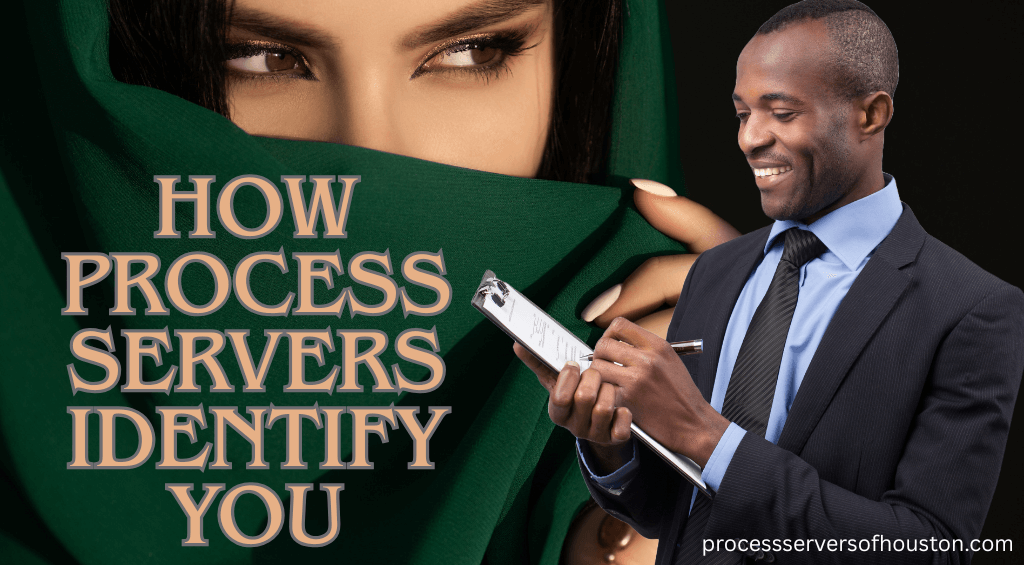
7 Best Legal Ways Process Servers Identify People in Texas

How Process Servers Identify Someone Avoiding Service of Process?

How Process Servers Identify the Right Person: Legal Tactics You Need to Know

One of the most important duties of a process server is making sure the legal documents they deliver go to the right person. But how do process servers identify people—especially if they’re evasive, live in apartments, or use aliases?

At Houston Process Servers, we use a combination of legal, ethical, and investigative techniques to make sure every delivery is made to the correct individual, even in complex or high-risk cases.

Let’s break down how process servers identify people—and why it matters.

Why Identification Is Critical in Process Serving

A process server’s job isn’t just to hand over legal documents—it’s to ensure those documents are served to the correct recipient. Incorrect service can result in:

  • Case delays

  • Dismissals

  • Contempt of court

  • Denied judgments

That’s why how process servers identify people is more than a routine—it’s a legal responsibility.

Legal Requirements in Texas for Proper Identification

In Texas, service of process must follow Rule 106 of the Texas Rules of Civil Procedure. This includes:

  • Serving the correct individual named on the documents

  • Providing evidence of service (affidavit of service)

  • Documenting the date, time, and location of service

Failure to accurately identify the recipient invalidates the process. That’s why certified process servers in Texas—like those at Houston Process Servers—follow strict procedures and verification methods.

YouTube video

Methods Process Servers Use to Identify a Recipient

Here’s a closer look at how process servers identify the correct party before completing service:

1. Photo or Description Provided by the Client

Most clients provide identifying details of the defendant, such as:

  • A current photo

  • Physical characteristics (height, build, race, tattoos)

  • Vehicle make/model or license plate

  • Workplace uniforms

Process servers use this information to confirm identity during face-to-face interactions.

2. Public Records and Background Checks

Certified process servers have access to legal databases, voter rolls, DMV records, and skip tracing tools that help confirm a subject’s name, known aliases, and current residence.

This data helps match names to addresses and verify personal identifiers legally and ethically.

3. Social Media and Online Clues

Public social media posts can help servers:

  • Match profile photos

  • Confirm the address from geotags

  • Track recent movements or vacations

  • Identify co-residents or family members

This information is never used for harassment—only as part of lawful service confirmation.

Process Server Came at Night. How Late Can a Process Server Serve?
© Houston Process Servers, LLC. All rights reserved.

4. Speaking with Neighbors or Coworkers

Sometimes, a server will engage with neighbors or reception staff (in apartment buildings or offices) to verify:

  • If the target lives or works at the address

  • When the individual is likely to be home

  • How they look or what they drive

This method helps ensure the process server identifies the right party before an attempt is made.

5. Asking Directly: Confirming Identity at the Door

When the individual answers the door, process servers may simply ask:

  • “Are you [Name]?”

  • “Do you live at this address?”

  • “Is your date of birth [DOB]?”

Lying to a process server is not technically a crime in Texas, but it may backfire if the individual is identified later through substitute service, surveillance, or camera footage.

6. Use of Surveillance or Wait Service

For evasive defendants, servers may:

  • Conduct surveillance on the address

  • Wait outside for a visual confirmation

  • Track the person entering/exiting the property

In such cases, courts may allow substitute service if identification has been confirmed through this method.

7. Doorbell Cameras or Ring Devices

If the person refuses to open the door, some servers leave documents while recording themselves on the property’s camera, along with verbal confirmation of identity.

This is not always admissible in court, but can support affidavits or alternate service requests.

What If the Person Denies Who They Are?

If the subject lies about their identity or refuses to confirm it, process servers do not confront or force service. Instead, we:

  • Document the interaction

  • Submit a non-service affidavit

  • Use alternative methods (substitute service, skip tracing, surveillance)

This ensures your case remains legally compliant and moves forward.

Top 7 Best Reasons You Must Get Divorce Papers Served Correctly in Texas
© Houston Process Servers LLC. All rights reserved

Table: Process Server Identification Methods

Method When Used Legal in Texas?
Photo Verification When a photo or description is available ✅ Yes
Background/Locate service If the address is unknown or suspect ✅ Yes
Social Media Search To confirm appearance or location ✅ Yes
Talking to Neighbors/Doorman To verify the address or schedule ✅ Yes
Direct ID Questions at the Door If the recipient answers ✅ Yes
Surveillance or Stakeout If the recipient avoids service ✅ Yes
Doorbell/Camera Evidence If the recipient refuses to open the door ✅ No

How We Do It at Houston Process Servers

When you work with Houston Process Servers, you get more than document delivery—you get:

  • ✅ Legal compliance in identification

  • ✅ Discreet and professional service

  • ✅ JBCC-certified Texas process servers

  • ✅ Email updates after every attempt

  • ✅ Rush and stakeout options for evasive individuals

Final Thoughts

Knowing how process servers identify someone legally and correctly is essential to ensuring your case proceeds without delay. At Houston Process Servers, we go beyond the basics to verify identities and protect your court filings.

Whether the person is evasive or just hard to reach, our team has the tools, knowledge, and certification to handle the job professionally.

Contact us. Houston Process Servers. Process server delivering legal papers to defendants house. Best Process Server,
© Houston Process Servers LLC. All rights reserved

7 Best Legal Ways Process Servers Identify People in Texas Read More »

Served at Work: 6 Fast Facts About Legal Document Delivery

Served at work: Woman served papers on work place.

Can You Be Served at Work? What You Need to Know About Being Served at Your Workplace

When pursuing a lawsuit, enforcing a court judgment, or delivering critical legal documents, you might wonder if someone can really be served at work. The short answer is yes—being served at work is both legal and common. In fact, workplace service is often one of the most effective ways to reach someone, especially when home delivery fails or someone is avoiding service.

In this guide, you’ll discover:

  • ✅ Whether being served at work is legal

  • ✅ Why it’s a practical option

  • ✅ How process servers deliver documents professionally

  • ✅ Workplace rights and etiquette

  • ✅ Tips for serving someone at their job

  • ✅ Advanced strategies when someone is evasive

Let’s dive in and explore everything you need to know!

1. What Does “Served at Work” Mean?

To be served at work means a process server delivers legal papers—such as a summons, subpoena, complaint, or notice—at the recipient’s place of employment. This may happen in an office, retail store, warehouse, factory, or even in vehicles located on company grounds. Legally, this method is just as valid as being served at home.

2. Is It Legal to Be Served at Work?

In Texas and most U.S. states, there is no law preventing legal service at an individual’s workplace. The legality depends on whether:

  1. The person is personally handed or properly delivered the documents

  2. The process server can identify the recipient correctly

  3. The method follows state rules for serving papers

If those conditions are met, the service is valid. Courts typically view workplace service as acceptable, especially if the person actively avoids being served at home.

3. When is Serving at Work Most Useful?

✅ When Home Service Fails

If someone ignores the doorbell, lies about residency, or avoids giving access, delivering at work may be the next best option.

✅ When the Defendant Works Long Hours

If someone works evenings, weekends, or odd shifts, arriving at their workplace may be the only chance for personal service.

✅ When Anonymity Isn’t Essential

For those who aren’t hiding from public scrutiny, service at work is unobtrusive and efficient.

Refuses To Be Served. Refuse to Be Served Court Papers
© Houston Process Servers LLC. All rights reserved

4. How Process Servers Handle Workplace Service

To serve someone efficiently and discreetly at their job, process servers follow best practices:

  • Gather workplace details: title, department, shift, location, where they clock in/out

  • Coordinate with reception or security to facilitate discreet handoff

  • Confirm the person’s identity by asking name, verifying job role, and, if needed, requesting a driver’s license or employee ID

  • Record attempt documentation, such as time, date, observations, and any interaction

  • Maintain professionalism, ensuring the interaction is calm, courteous, and quick

These steps ensure both legality and respect for the recipient and their workplace environment.

5. Can an Employer Refuse Entry to a Process Server?

Employers are not legally required to allow process servers onto private property. However, most 기업 understand that legal papers must be delivered and will typically comply. If an employer refuses, the process server may:

  • Leave the documents with a receptionist or manager who can forward them

  • Complete a non-service affidavit, documenting refusal

  • File for alternative or substitute service if needed

6. Addressing Privacy and Professional Courtesy

Being served at work can be uncomfortable or embarrassing. That’s why reputable process servers:

  • Keep the exchange quiet and private

  • Avoid announcing “legal papers” loudly

  • Hand over documents discreetly

  • Allow the person to read the papers privately

If recipients feel treated with respect, it minimizes workplace stress and potential backlash.

Can Santa Serve you legal papers?
© Houston Process Servers LLC. All rights reserved

7. Tips for Serving Someone at Work

If you’re arranging service at work, consider these tips:

  • ✅ Provide accurate workplace details (name, shift, location)

  • ✅ Use a certified process server familiar with workplace etiquette

  • ✅ Include both home and work addresses in your service order

  • ✅ Be transparent about any concerns—especially if sensitive documents are involved

  • ✅ Expect email updates summarizing service attempts and outcomes

8. If the Person is Evasive at Work

Sometimes, even at work, a person will avoid service by hiding, staying off-site, taking breaks outside, or working remotely. In such cases, the server may:

  • Conduct multiple visits

  • Check break areas, parking, and secondary entrances

  • Use skip tracing to identify alternate addresses

  • Eventually, file a motion to permit substitute service

YouTube video

9. Substitute Service When Workplace Service Fails

When a person cannot be served—even at work—and is clearly evasive:

  1. Document due diligence with logs and affidavits

  2. Request court-approved substitute service

  3. Potential substitute methods include:

    • Delivery to building receptionist or coworker over 16

    • Posting notice on office door

    • Certified mail to work or home

    • Publication in newspaper or legal forum

Once substitute service is approved and completed, the recipient is legally considered served.

10. Why Workplace Service Should Not Be Ignored

  • It increases your success rate for valid service

  • Helps you meet court deadlines and avoid delay

  • Reduces the chance of needing substitute service or motions

  • Saves time and money compared to extended search or legal avenue

Summary: When and How to Serve at Work

  • Served at work is a legally valid method in Texas and beyond

  • ✅ It is best used after home service fails or when the schedule demands it

  • ✅ Process servers follow legal protocols and respect workplace boundaries

  • ✅ Substitute methods can be used if the workplace service fails

When done correctly, delivering legal papers at work is efficient, respectful, and fully compliant.

Contact us. Houston Process Servers. Process server delivering legal papers to defendants house. Best Process Server,
© Houston Process Servers LLC. All rights reserved

Served at Work: 6 Fast Facts About Legal Document Delivery Read More »

9 Things Process Servers Are Not Allowed to Do: Exposing Legal Boundaries

People said NO to a process server. What process servers are not allowed to do?

9 Things Process Servers Are Not Allowed to Do: Exposing Legal Boundaries

Process servers play a vital role in the justice system, ensuring individuals receive court documents like summonses, subpoenas, or petitions in a legally valid way. But many people misunderstand what process servers are legally allowed to do—and what they’re not allowed to do.

At Houston Process Servers, we consistently hear questions like:

  • “Can a process server come inside my house?”

  • “Are they allowed to pretend to be a cop?”

  • “Do I have to accept the papers for them to count?”

In this article, we’ll debunk the most common myths and highlight 9 things process servers are not allowed to do, so you can better understand your rights and the legal limits of process serving in Texas.

1. Process Servers Are Not Allowed to Pretend to Be Police

A legitimate process server will never impersonate law enforcement. They are not officers of the law and cannot:

  • Wear a police-style uniform

  • Show a fake badge

  • Claim they are a sheriff or detective

Impersonating a police officer is a criminal offense in Texas. Professional process servers, like those at Houston Process Servers, are trained to work within ethical and legal limits, not to scare or deceive.

Evasive person hiding
© Houston Process Servers LLC. All rights reserved

2. Process Servers Not Allowed to Enter Without Permission

No, a process server cannot walk into your house or apartment without your consent.

Even if they see you inside, they must remain on public property or accessible areas such as:

  • Sidewalks

  • Apartment lobbies

  • Public driveways

Forcing entry or climbing a fence is considered criminal trespass—a line no process server should ever cross.

3. Process Servers Not Do Harassment or Stalking

Process servers are not allowed to harass, intimidate, or follow someone obsessively. Doing so is not only unprofessional—it may be illegal.

At Houston Process Servers, we:

  • Limit attempts to legally defined hours

  • Make reasonable efforts only

  • Never threaten or use aggressive language

If you feel unsafe, you can file a complaint or report the incident to authorities.

YouTube video

4. Not Allowed to Give Legal Advice or Interpret Documents

While process servers understand the legal nature of the documents they deliver, they are not lawyers and are not allowed to give legal advice.

This includes:

  • Telling you what the paperwork means

  • Suggesting what to do next

  • Estimating court deadlines or consequences

If you have legal questions, talk to an attorney, not the process server.

5. Process Servers Not Allowed to Serve on Sundays Without Approval

In Texas, service of process is prohibited on Sundays unless the court issues a special order allowing it.

Professional servers respect state laws and will:

  • Avoid prohibited service days

  • Schedule attempts within permitted hours

  • Seek approval if alternative timing is needed

Don’t be fooled by anyone claiming to serve papers “no matter what.” That’s simply not legal.

Process Server Came at Night. How Late Can a Process Server Serve?
© Houston Process Servers, LLC. All rights reserved.

6. Process Servers Not Do Forcible Delivery

Here’s a fact many don’t know: you don’t have to take the papers for service to be valid.

A process server cannot:

  • Shove papers in your hands

  • Force you to sign anything

  • Trick you into saying your name

If you refuse the documents, the server may leave them nearby or seek permission for substitute service.

7. Process Servers Not Allowed to Climb Fences or Enter Gated Property

If you live in a gated residence or fenced home, a process server must respect property lines.

They can:

  • Leave documents with a guard (if allowed)

  • Mail service requests to the court

  • Wait in a public area

They cannot:

  • Jump fences

  • Sneak in behind cars

  • Open locked gates

That’s a legal boundary they are not allowed to cross.

8. Not Allowed to Offer Real-Time GPS Tracking or Private Surveillance

While some may imagine a process server lurking with high-tech equipment, that’s a Hollywood myth.

Real process servers:

  • Do not offer GPS tracking or surveillance

  • Do not “stake out” homes beyond lawful timing

  • Only send email updates after each attempt (like we do at Houston Process Servers)

We focus on lawful, efficient, and professional delivery, not spying or surprise tactics.

9. Process Servers Not Do Misrepresentation or Deception

A process server is not allowed to trick you into a false meeting or lie about their purpose.

They cannot:

  • Claim they are delivering a package

  • Pretend to be a neighbor

  • Act like a salesperson

They are legally required to identify themselves truthfully when serving papers.

Black male asking question "Is It Legal to Lie to a Process Server?"
© Houston Process Servers LLC. All rights reserved


Summary Table: What Process Servers Are Not Allowed to Do

Action Allowed? Notes
Entering a home without consent ❌ No Considered trespassing
Pretending to be law enforcement ❌ No Criminal impersonation
Serving on Sundays without a court order ❌ No Prohibited under Texas law
Forcing someone to accept documents ❌ No Physical acceptance is not legally required
Harassment or stalking ❌ No Reportable offense
Giving legal advice ❌ No Must refer you to an attorney
Climbing fences or entering gated property ❌ No Trespass violations
Offering live tracking or surveillance updates ❌ No Email updates only (post-attempt)
Misleading or tricking recipients ❌ No Misrepresentation is unethical and possibly illegal

Final Thoughts: Know What Process Servers Are Not Allowed to Do

If you’re facing a legal situation, it helps to know your rights and understand what process servers not allowed to do.

At Houston Process Servers, we follow all Texas laws strictly. We do not trespass, harass, or use intimidation. Our job is to:

  • Serve your documents lawfully

  • Respect boundaries

  • Deliver proof through affidavits and email updates

We serve government agencies, attorneys, and businesses across Houston and surrounding areas with integrity and precision.

Legal Process Server delivered legal documents to the defendants.
© Houston Process Servers LLC. All rights reserved

9 Things Process Servers Are Not Allowed to Do: Exposing Legal Boundaries Read More »

Is Avoiding a Process Server Illegal? 7 Consequences You Didn’t Expect

Is Avoiding a Process Server Illegal? 7 Consequences You Didn't Expect

Is Avoiding a Process Server Illegal? 7 Consequences You Didn’t Expect

Avoiding a process server might seem like a clever move—until the consequences hit. Many people think if they dodge service, the legal matter disappears. But that’s far from the truth.

At Houston Process Servers, we’ve seen it all: hiding in closets, refusing to open the door, or even pretending not to live at the address. But here’s the real question:
Is avoiding a process server illegal?

Let’s explore what really happens when someone tries to avoid a process server, and why it usually backfires.

What Does It Mean to Avoid a Process Server?

When you’re avoiding a process server, you’re actively refusing to accept legal documents related to a lawsuit, subpoena, divorce, or other court action. This might include:

  • Not answering the door

  • Giving false information

  • Moving without leaving a forwarding address

  • Hiding from known vehicles or uniforms

  • Using friends/family to lie about your location

It’s not uncommon, but it can cost you much more than you think.

Is Avoiding a Process Server Illegal?

Avoiding a process server is not a crime in most cases. You can technically refuse to answer the door or hide if you want to.

However, here’s the catch:
Avoidance doesn’t stop the legal process, and courts have multiple legal ways to serve you anyway, even without your cooperation.

So, while it’s not technically illegal, avoiding a process server can still hurt you legally. In fact, your avoidance may lead the court to approve alternate service methods and proceed without your knowledge.

YouTube video

Legal Alternatives When You Avoid Service

If you try to avoid a process server, the plaintiff (the person suing you) can file a motion with the court requesting alternative or substitute service.

Here’s how that works in Texas:

✔️ Posting on the Door

The court may allow the process server to post the documents on your front door with a photo as proof—legal service completed.

✔️ Serving Someone at the Same Address

If someone over 16 answers the door, documents may be served to them on your behalf.

✔️ Certified Mail or Publication

Courts may allow service by certified mail, email, or even publication in a local newspaper or online legal forum.

Table: What Happens When You Avoid a Process Server

Action You Take Legal Consequence Can the Case Proceed?
Refuse to answer the door Server documents attempt; report to the court ✅ Yes
Lie about identity May be documented and used against you ✅ Yes
Move without notice Skip tracing or substitute service is used ✅ Yes
Ignore the alternative service The case proceeds without your appearance ✅ Yes
Never read the published notice Considered legally served ✅ Yes
Process Server Served hiding Persons in Houston, Texas
© Houston Process Servers LLC. All rights reserved

Why Avoiding a Process Server Is a Bad Idea

Even if avoiding a process server isn’t illegal, it can backfire in serious ways:

❌ Default Judgments

If you don’t respond because you avoided service, the court can rule against you by default—resulting in wage garnishment, loss of rights, or liens.

❌ Missed Deadlines

You lose the opportunity to defend yourself or present evidence.

❌ Higher Legal Costs

Re-serving fees, attorney motions, court filing requests—all may be added to what you owe.

❌ Criminal Charges (Rare Cases)

In some states, aggressive or repeated obstruction can result in contempt of court or obstruction of justice charges.

Real Talk: You Can Run, But You Can’t Hide

At Houston Process Servers, we’re trained to deal with evasive recipients. Our certified team uses:

  • Legal skip tracing

  • Stakeout (wait service)

  • Surveillance

  • Substituted service motions

  • Documentation for affidavits

So even if someone avoids service, we’ll follow all legal channels to ensure they’re served according to Texas law.

YouTube video

What You Should Do Instead

Instead of trying to avoid a process server, consider the better legal strategy:

✅ Accept the documents
✅ Consult a lawyer
✅ Respond to the case
✅ Protect your rights

You’ll have more control and may even be able to resolve the matter quickly.

Final Thoughts

Is avoiding a process server illegal?
Not exactly. But it’s not smart either.

Avoidance doesn’t erase the legal process—it just makes it more expensive, less fair, and more dangerous for your case. If you’re being sued, ignoring the process won’t make it go away. It will move forward—with or without you.

Contact us. Houston Process Servers. Process server delivering legal papers to defendants house. Best Process Server,
© Houston Process Servers LLC. All rights reserved

Is Avoiding a Process Server Illegal? 7 Consequences You Didn’t Expect Read More »

How Long Does It Take for Papers to Be Served? 7 Fast Facts You Should Know

How Long Does it Take for Papers to Be Served?

How Long Does It Take for Papers to Be Served?

Serving legal documents is a critical first step in most court cases, from civil lawsuits to family law matters. Whether you’re initiating legal action, enforcing a judgment, or delivering notice, one of the most common questions is: How long does it take for papers to be served?

In Texas, and especially in a major metro area like Houston, several important factors affect the time it takes for legal service to be completed. This article outlines those variables and explains how to ensure the process moves quickly and correctly, without compromising legal validity.

Why Timing of Process Service Matters

In any legal case, the court requires proper notification to the defendant or respondent. This notification must happen through a legally recognized method of delivery known as service of process. If that delivery isn’t completed, your case can be delayed, rescheduled, or even dismissed.

Because courts often set deadlines for service after a case is filed, knowing how soon papers can be served is essential to staying on schedule and avoiding legal setbacks.

What Factors Affect How Long It Takes to Serve Papers

There is no fixed timeline for service of process. The duration depends on many variables, including the person being served, their location, and how much information is available to the process server.

Here is a breakdown of the most common factors that influence the service timeline:

Factor Description
Accuracy of Address A correct and current address allows for a faster and more direct attempt.
Availability of the Recipient If the individual is home or at work during the visit, the service is easier.
Type of Location Service at a residence, business, jail, or public space impacts speed.
Willingness to Accept Papers Some recipients try to avoid or refuse service, which may cause delays.
Court Rules or Restrictions Some jurisdictions require specific delivery methods or timeframes.
Information Provided More detail (e.g., names, photos, vehicle info) allows for efficient service.
Number of Required Attempts Some cases require multiple attempts on different days or times.

The more accurate and complete your information is, the faster your documents are likely to be delivered.

Process servers vs sheriff
© Houston Process Servers LLC. All rights reserved

What Happens During the Service of Process

The legal process begins when documents are handed over to a certified Texas process server. Once the case is accepted, the process server reviews the documents and begins attempts to deliver them.

If the first attempt is unsuccessful, the process server may return at different times or days. Each attempt is documented, and once a successful service is made, an affidavit or Return of Service is completed and filed with the court. This affidavit is required for the case to proceed.

The Return of Service includes information such as the date, time, method, and location of service, as well as details about the recipient and any interactions that occurred.

Why Some Deliveries Take Longer Than Others

So, how long does it take for papers to be served?  Not every service of process goes smoothly. There are a few common reasons why service might take longer:

If the recipient is attempting to avoid service, it may take additional effort to locate and legally approach them. This is especially common in family law and financial cases.

If the address is incorrect or outdated, a skip tracing service may be necessary to track down the correct location. Locate service is a legal method of locating individuals using databases, public records, and investigative tools.

If the recipient is in jail, the process server must coordinate with the correctional facility’s policies and visitation restrictions. For example, serving someone at Harris County Jail requires knowledge of their housing unit, SPN number, and booking status.

Process server wearing as waiter, disquises. Can Process Servers Wear Disguises?
© Houston Process Servers, LLC. All rights reserved

How to Speed Up the Process of Serving Papers

There are several ways you can reduce the time it takes to complete legal service.

  1. Double-check the spelling and format of all names and addresses.

  2. Provide photos or descriptions if the recipient is known to be evasive.

  3. Include all known work, home, or alternate addresses.

  4. Be upfront about any known obstacles such as gates, guards, or security restrictions.

  5. Request professional skip tracing early if there’s any chance the person has moved.

  6. Share any known schedules or habits (work hours, routines, common locations).

The more your process server knows, the more effectively they can deliver the papers.

YouTube video

What If the Person Refuses to Accept the Papers?

Texas law does not require that the recipient willingly accept the documents. If the server can identify the individual, explain the nature of the documents, and document the interaction, service may still be considered valid even if the recipient refuses to touch or take the papers.

This is especially important when serving someone in jail, where verbal confirmation and identity matching may be sufficient under state guidelines. A certified Texas process server will be familiar with these legal nuances.

Why Use a Local Houston Process Server

Local knowledge can make a major difference in the speed and success of legal services. A Houston-based process server knows the city’s layout, traffic conditions, courthouse procedures, and even neighborhood patterns.

They’re also familiar with specific rules and expectations in Harris County courts, which helps ensure service is done correctly the first time. Additionally, local servers often have access to jails, office parks, and high-security buildings that might delay out-of-area professionals.

So, How Long Does It Take for Papers to Be Served?

The time it takes for legal papers to be served depends on many factors, from the accuracy of the address to the cooperation of the recipient. While some cases are completed quickly, others require persistence and careful planning. By working with an experienced local process server and providing accurate information, you can significantly improve the efficiency and reliability of the process.

If you’re preparing for a court case or legal action in the Houston area and need certified legal document delivery, contact a reputable process server as early as possible. Doing so helps ensure that your case stays on track and meets all necessary court deadlines.

Contact us. Houston Process Servers. Process server delivering legal papers to defendants house. Best Process Server,
© Houston Process Servers LLC. All rights reserved

How Long Does It Take for Papers to Be Served? 7 Fast Facts You Should Know Read More »

Can Process Servers Conceal Their Identities?

Process server wearing like pizza delivery guy. Can Process Servers Conceal Their Identities? Does a Process Server Have to Identify Themselves?

Can Process Servers Conceal Their Identities? The Truth Behind the Badge-Free Professionals

At Houston Process Servers, one of the most frequently asked—and most misunderstood—questions we hear is:
“Can process servers conceal their identities?”

This question usually comes from someone who’s either been caught off guard by a server or suspects they’ve been approached by one in disguise. Whether you’re trying to understand your rights or make sense of how legal papers got to your door, this guide breaks it down.

We’ll go beyond simple yes or no answers and give you real legal facts, professional standards, and what’s actually happening on the streets of Houston and surrounding areas.

First, What Exactly Is a Process Server?

A process server is a legal professional tasked with delivering court documents such as summons, complaints, subpoenas, restraining orders, or motions. Their job is to ensure the defendant or recipient receives notice of a lawsuit or legal matter, complying with due process of law.

They are not law enforcement officers, but they play a crucial role in the legal system. They often serve papers in civil cases, ranging from divorce to debt collection and small claims.

So, Can Process Servers Conceal Their Identity?

Yes, but only to a certain extent—and never illegally.

In Texas and many other states, process servers are not required to announce themselves at first contact. That means they are not obligated to walk up to someone and say,
“Hi, I’m here to serve you legal papers.”

       What They Can’t Do:

  • They cannot impersonate law enforcement.
    Pretending to be a police officer, sheriff, or federal agent is illegal and a felony.

  • They cannot lie about who they are on official documents.
    Affidavits of service must be truthful and accurate.

  • They cannot use threats or force.
    Process servers are not allowed to intimidate or coerce anyone.

Process Server Came at Night. How Late Can a Process Server Serve?
© Houston Process Servers, LLC. All rights reserved.

Why Would a Process Server Want to Conceal Their Identity?

Because people often avoid being served.

In fact, some individuals go to great lengths to dodge service—leaving town, switching jobs, or hiding at home. In these situations, servers need to think creatively and act discreetly to complete the job.

This might include:

  • Dressing like a delivery driver

  • Wearing casual clothing to blend in

  • Approaching without immediately disclosing their intent

That’s not illegal. That’s a smart, lawful strategy.

At Houston Process Servers, our team is trained to stay within legal boundaries while using proven techniques to reach evasive individuals. Discretion is part of the job, especially for high-stakes cases like custody disputes, restraining orders, or lawsuits involving large financial claims.

Misconceptions About Concealment

Let’s clear up a few myths about process servers:

Myth Truth
Process servers must wear a uniform No. Most dress in plain clothes.
They must say, “You’ve been served.” Not required legally.
Servers must identify themselves immediately Not unless asked or required in specific settings (e.g., jails, government buildings).
Disguises are illegal Only if they involve impersonating law enforcement or trespassing.

Legal vs. Illegal Concealment

Here’s how the law sees it:

  • Legal concealment is using ordinary behavior or attire to avoid alerting the person prematurely.

  • Illegal concealment includes using a fake badge, misleading statements, or forging documents.

So if you’re wondering, “Can process servers conceal who they are?” the answer is yes, but only when it does not cross legal boundaries.

YouTube video

Houston-Specific Rules and Conduct

In Houston and throughout Texas:

  • Certified process servers are appointed by the Judicial Branch Certification Commission (JBCC).

  • They are expected to maintain professional conduct, including honesty in affidavits and lawful service attempts.

  • They can approach your home, workplace, or even a public place, as long as they do not trespass or misrepresent their authority.

While Texas law allows a fair amount of discretion, we never cross ethical lines.

When We Conceal, It’s Because We’re Professionals

At Houston Process Servers, we serve in high-risk and evasive situations daily. While we may not always lead with “we’re here to serve you,” we will always remain:

  • Legal

  • Professional

  • Discreet

  • Efficient

And most importantly, we keep your case moving through the courts by completing the job the right way.

Final Thoughts: What Should You Do If You’re Being Served?

  • Don’t panic — it’s not a crime to be served.

  • Don’t avoid it — it only delays your court case.

  • Do accept the papers and contact your attorney.

Whether you’re the one being served or you’re hiring someone to serve, remember: Process servers may conceal their approach, but never their integrity.

Contact us. Houston Process Servers. Process server delivering legal papers to defendants house. Best Process Server,
© Houston Process Servers LLC. All rights reserved

Can Process Servers Conceal Their Identities? Read More »

What Is the Justice System? 9 Powerful Truths About the Legal Process

What Is the Justice System? 9 Powerful Truths About the Legal Process

What Is the Justice System and How Does It Work in Houston

What Is the Justice System?

The justice system is a structured legal framework designed to uphold the rule of law, ensure public safety, and protect individual rights. It involves the police, courts, and correctional institutions working together to prevent crime, resolve disputes, and administer fair consequences for unlawful behavior.

Understanding the U.S. Legal System

The justice system in the United States is divided into criminal, civil, and administrative branches. These divisions operate at the local, state, and federal levels, ensuring legal processes are fairly carried out from minor disputes to complex federal crimes.

  • Criminal law deals with violations such as theft, assault, or murder.
  • Civil law resolves non-criminal issues like contracts, divorce, or personal injury.
  • Administrative law involves regulations enforced by government agencies.


The Legal Process: Step-by-Step

  1. Investigation: Law enforcement investigates possible crimes.
  2. Filing Charges: Prosecutors file formal accusations.
  3. Court Appearances: Hearings, trials, and plea bargains take place.
  4. Judgment: A judge or jury renders a verdict.
  5. Sentencing or Resolution: Penalties are issued, or civil disputes are resolved.
Evasive person hiding
© Houston Process Servers LLC. All rights reserved

How Does the Justice System Work in Houston?

Houston follows both Texas state law and federal guidelines. Legal documents, court orders, and subpoenas must be properly served, often by a licensed process server like Houston Process Servers, LLC.

Process servers play a critical role in initiating court actions by ensuring individuals or businesses are officially notified. Whether it’s a restraining order or summons, the delivery must meet legal requirements to hold up in court.

Importance of Process Servers in the Legal System

A process server ensures:

  • Legal notification of the involved parties
  • Documentation of delivery (affidavit of service)
  • Timely delivery to keep the case moving

We update our clients after every attempt, so you’re always informed.

Key Components of the Justice System

Component Function Involvement in the Legal System
Law Enforcement Investigates and enforces laws Initiates criminal cases
Prosecutors Files and prosecutes criminal charges Represents the government
Defense Attorneys Defends accused parties Ensures fair representation
Judges Oversees legal proceedings Issues rulings, sentences
Process Servers Delivers legal documents Begins the legal process
Correctional System Manages incarceration and rehabilitation Carries out sentences
Process servers vs sheriff
© Houston Process Servers LLC. All rights reserved

When Do You Need a Process Server in Houston?

  • Serving a subpoena
  • Delivering a restraining order
  • Notifying a business of a lawsuit
  • Sending a summons or court notice


Example: Role in Civil Lawsuits

In a civil case, the plaintiff files a complaint, and then a process server delivers the summons to the defendant. Without proper service, the case may be delayed or dismissed.

Why the Legal System Relies on Structure

A fair legal system ensures:

  • Equal protection under the law
  • Transparent judicial processes
  • Accountability for all parties involved

A system without structure invites chaos. That’s why the justice system must be trusted and well-managed.

How Is A Restraining Order Delivered
© Houston Process Servers LLC. All rights reserved

Common Challenges in the Legal System

  • Backlogs of court cases
  • Evasive defendants
  • Miscommunication or failed service

That’s why using a certified and reliable process server is crucial.

How We Help Navigate the Justice System

At Houston Process Servers, LLC, we assist legal professionals and agencies by ensuring the timely and secure delivery of legal documents. Our licensed team works with:

  • Law firms
  • Government agencies
  • Private investigators
  • Corporations

We do not serve small claims or work with private individuals.

YouTube video

Friendly Asked Questions About the Justice System


What is the justice system?

The justice system is a structured set of legal institutions designed to enforce laws, protect rights, and ensure justice is administered fairly.

How does the legal system work?

The legal system operates through law enforcement, courts, attorneys, and process servers who ensure laws are applied correctly.

Why is process serving essential to the legal system?

Process serving initiates legal actions by officially notifying the involved parties, maintaining due process.

What’s the difference between civil and criminal law?

Civil law handles disputes between parties; criminal law deals with crimes against society or individuals.

Who can serve legal documents in Houston?

Only certified process servers like Houston Process Servers, LLC can deliver official court documents.

Can you serve papers to someone in jail in Harris County?

Yes, our team serves legal papers and offers notary services in the Harris County jail.

What happens after a process server delivers documents?

A notarized affidavit of service is filed to confirm legal delivery.

Do you serve individuals or businesses?

We serve both. However, we only accept jobs from corporations, attorneys, investigators, and government agencies.

What if the defendant avoids service?

We provide stakeout services for evasive individuals to ensure legal delivery.

How many attempts are included in a process service?

Each process service includes up to four attempts.

Let Us Help You Serve Justice

If you need professional assistance navigating the legal system, especially with document delivery or notification, trust our experienced team.

📩 Contact us today at https://processserversofhouston.com/contact-us/ 📧 Email: houstonprocess@gmail.com 📍 Address: 2401 Fountain View Dr. Ste 461 Unit #1040, Houston, TX 77057 📞 Phone: (832) 947-3106

Contact us. Houston Process Servers. Process server delivering legal papers to defendants house. Best Process Server,
© Houston Process Servers LLC. All rights reserved

What Is the Justice System? 9 Powerful Truths About the Legal Process Read More »